
Calacatta Gold
A two-minute look at where Calacatta Gold comes from, how it entered design history, and one way to use its visual language differently at home.
Origin
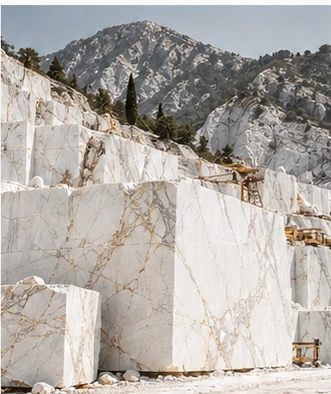
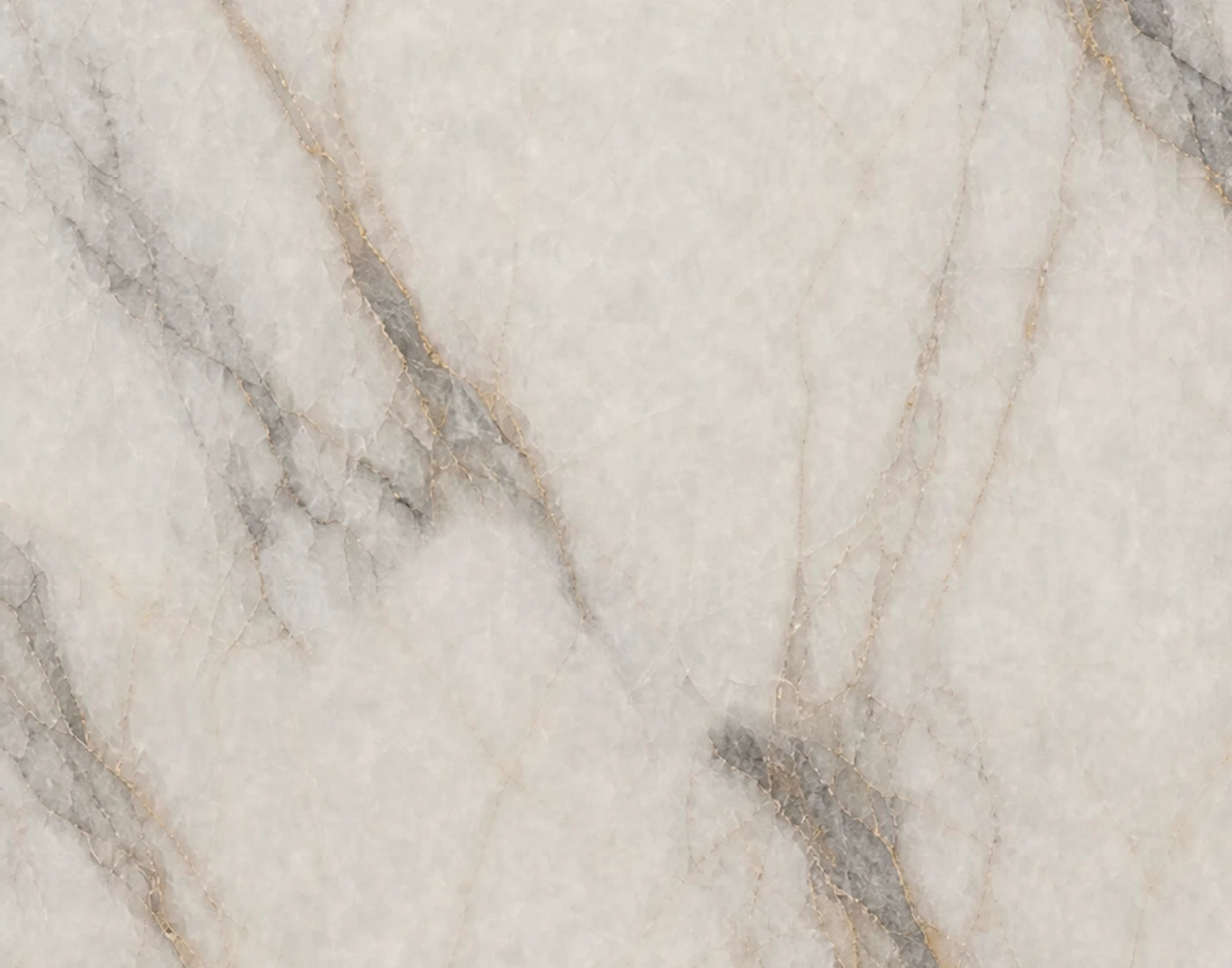
Calacatta Gold is quarried in Carrara, Italy, in the Apuan Alps — a region renowned for some of the world’s most exquisite marbles. Its distinctive white field and warm gold veining are the result of rare geological conditions found in this historic landscape.
History of Use
Calacatta has been prized since Roman times and saw a major revival during the Renaissance, when it was used in the work of master artists and architects. Its bold veining and luminous character have made it a symbol of luxury for centuries, from palaces to modern icons.
Fun Fact
Calacatta Gold is rarer than most marbles. Unlike the more common Carrara, it is quarried in smaller quantities, which makes each slab unique and highly coveted.
At Home
Calacatta Gold brings instant elegance to any space. It works beautifully on countertops, feature walls, fireplace surrounds, and in bathrooms, adding warmth and sophistication while remaining timeless.
The Chief Designer’s Move
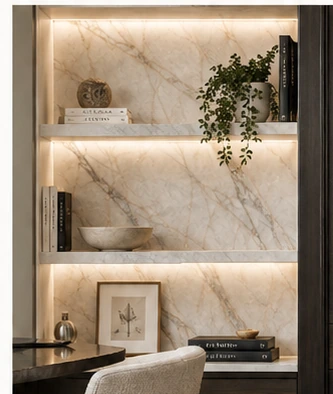
Take it beyond the expected. Use Calacatta Gold as a bookcase backing, a ceiling panel, or a statement niche to introduce artful luxury in an unexpected way. Paired with warm lighting and natural materials, it becomes more than a surface — it’s a focal point that elevates the entire room.