
01 / Origin
Where the material story begins.
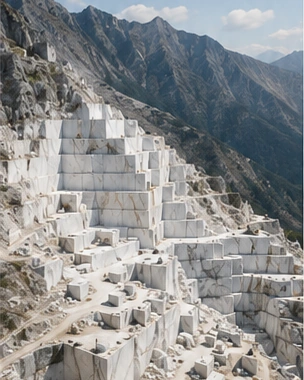
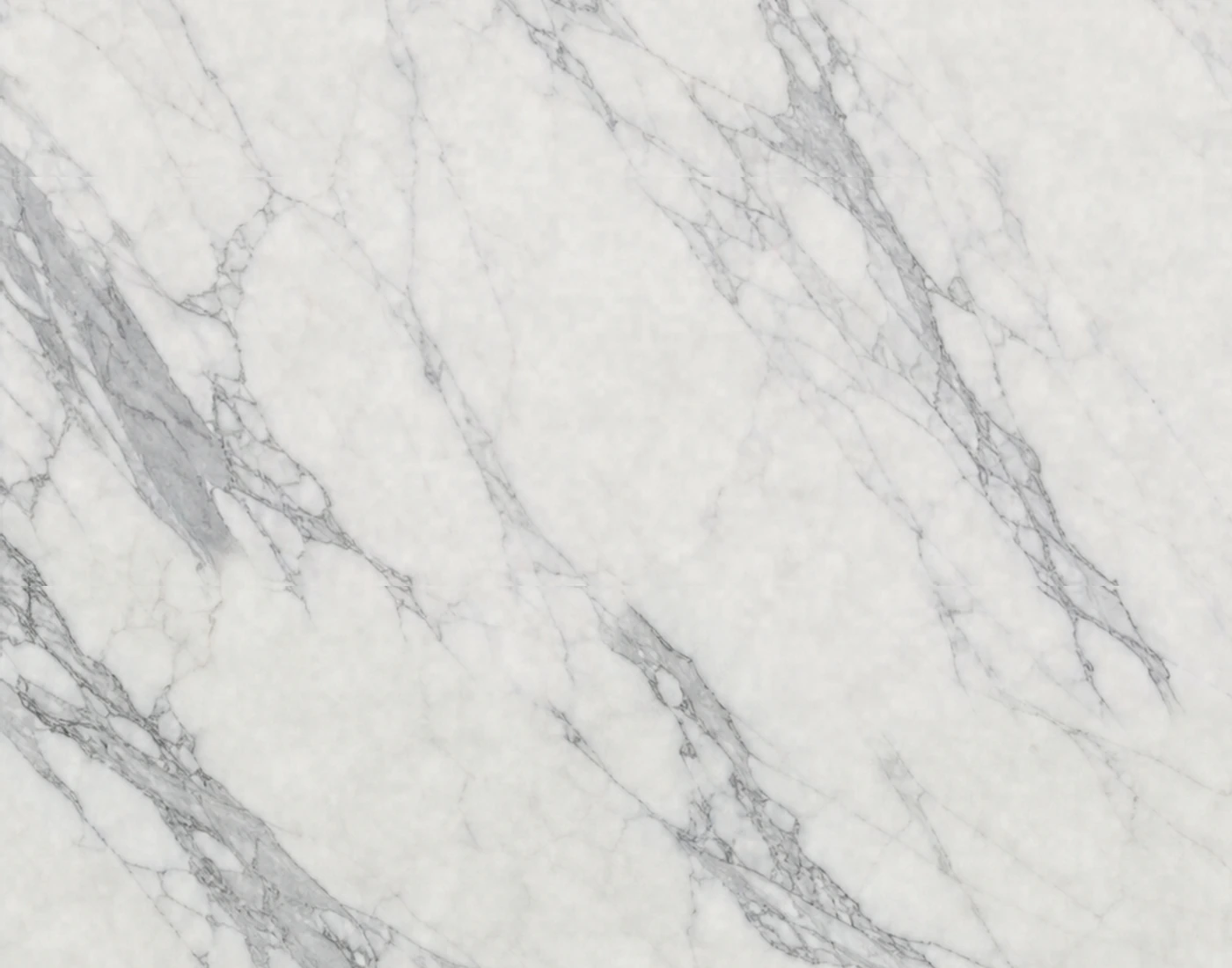
Statuario belongs to the celebrated white-marble tradition of the Carrara area in Tuscany. It is known for a bright white ground and decisive gray veining that can read almost like ink drawn through stone.
02 / History of use
How it entered the design vocabulary.
The name points toward statuary-quality marble: exceptionally pale stone historically reserved for sculpture and prestige architectural work. That association with carved form helped Statuario become a shorthand for gallery-like luxury in contemporary interiors.
03 / Fun Fact
The most memorable Statuario layouts are often not the busiest. Large areas of clean white space around a strong vein can create more visual drama than an evenly patterned slab.
04 / Common Use Case
Where the surface naturally works.
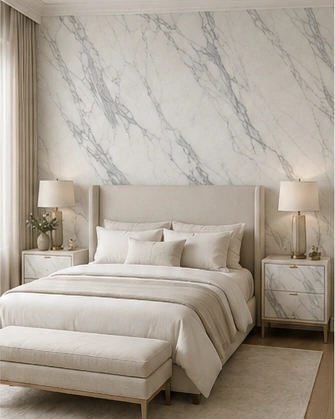
Statuario works beautifully as wallpaper behind a bed or vanity, giving a room a gallery-like calm with elegant gray movement.
05 / The Chief Designer's Move
A SPLASH Decor application.
Wrap a full-height headboard wall in Statuario wallpaper and carry the pattern onto coordinating nightstand or dresser fronts from the furniture collection for a tailored suite effect.
See the surface at SPLASH
From material history to a room of your own.
Explore Statuario across SPLASH wallcovering, mural, ceramic tile, and furniture applications.
Editor's note: decorative-stone, wood, and metal names can be trade families. Quarry, species, alloy, and geological classification may vary by supplier. SPLASH uses these names to describe the visual material language represented by the collection.